Health and Safety Policy for a Removal Company in St Johns Wood
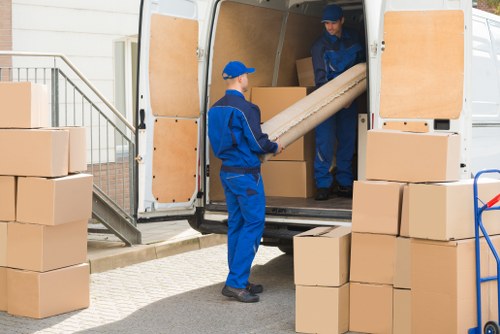 Health and safety are central to every successful move. For a removal company operating in St Johns Wood, this means protecting staff, clients, visitors, property, and the public at every stage of the service. Our policy sets out the standards, responsibilities, and working practices that help ensure each house move, office relocation, and storage transfer is carried out with care, control, and professionalism.
We recognise that removals involve physical work, time pressure, traffic movement, lifting, packing, and the handling of items that may be heavy, fragile, awkward, or valuable. To manage these risks effectively, the company applies a preventive approach based on planning, supervision, training, and continual improvement. Every team member is expected to work safely, report concerns promptly, and support a culture where accidents and near misses are taken seriously.
Our removal company St Johns Wood policy applies to all employees, contractors, and temporary staff. It covers activities carried out at customer premises, in transit, at storage facilities, and during loading or unloading.  The aim is to maintain high standards while reducing the likelihood of injury, property damage, and disruption.
Responsibility and accountability are key parts of this policy. Directors and managers are responsible for making sure suitable procedures are in place, resources are provided, and safe working practices are monitored. Team leaders must assess each job, brief staff, and stop work if conditions become unsafe. Employees must follow instructions, use equipment properly, and avoid any action that could place themselves or others at risk.
Before any move begins, a suitable risk assessment is completed. This includes reviewing access routes, staircases, parking arrangements, weather conditions, lifting requirements, and the presence of delicate or hazardous items. Where necessary, additional controls are put in place, such as using trolleys, protecting floors, scheduling extra labour, or separating particularly heavy objects into safer handling stages.
 Training is essential to the success of the policy. All staff receive instruction in safe lifting techniques, manual handling awareness, vehicle safety, packing methods, equipment use, and emergency response. Refresher training is provided regularly so that standards remain consistent. Supervisors also receive guidance on hazard recognition, incident reporting, and the management of working time to reduce fatigue-related mistakes.
Manual handling is one of the most important safety concerns in the removals industry. To reduce strain and injury, staff are trained to bend their knees, keep loads close to the body, avoid twisting under weight, and ask for assistance when needed. Items that are too large, too heavy, or unstable must not be moved by one person alone unless a safe method has been approved. Where available, lifting aids and specialist equipment should be used.
Vehicle safety is another core requirement. Drivers must hold the correct licence, carry out routine checks, and ensure vehicles are roadworthy before leaving the depot. Loads must be secured to prevent shifting during transit, and weight limits must never be exceeded. Safe driving behaviour, including speed control, route planning, and attention to vulnerable road users, is expected at all times. No driver may operate a vehicle while unfit through fatigue, illness, or impairment.
At customer premises, the company takes steps to protect both property and people. Floors, walls, door frames, and fixtures are shielded where appropriate. Work areas should be kept tidy to prevent slips, trips, and falls. Staff must maintain clear communication with clients and with one another, especially when moving items through narrow spaces or shared entrances.  Any hazard identified on site should be reported immediately and dealt with before work continues.
Personal protective equipment, or PPE, is provided when required and must be worn correctly. This may include gloves, safety footwear, hi-vis clothing, and other task-specific protection. PPE does not replace safe systems of work; it supports them. Staff are also expected to wear suitable clothing that allows movement and does not create additional risk during lifting or carrying.
The company also places emphasis on housekeeping and equipment care. Packing materials, straps, tools, and protective covers should be stored neatly when not in use. Damaged equipment must be removed from service and reported. Regular inspections are carried out on dollies, blankets, ramps, straps, and other moving equipment to ensure they remain safe and effective. A clean and organised working environment reduces the chance of incidents and supports efficient service delivery.
Emergency procedures are clearly communicated to all personnel. Staff must know how to respond to accidents, injuries, fire, vehicle breakdowns, or security concerns. First aid supplies are made available, and incidents are recorded in line with company procedures. Where an injury or near miss occurs, the cause is reviewed so that lessons can be learned and repeat problems prevented.  Any serious incident is escalated without delay to the appropriate manager.
We also expect every employee to contribute to continual improvement. Concerns about unsafe conditions, faulty equipment, or unclear procedures should be raised immediately. The company reviews this policy regularly to ensure it remains effective, practical, and up to date. Changes in working methods, equipment, or regulations are reflected in updated procedures and additional staff briefings where required.
This removal company health and safety policy is designed to support reliable, professional, and responsible operations. By combining planning, training, communication, and consistent supervision, we reduce risk and improve service quality. Safety is not an optional extra; it is an essential part of how we work, from the first item packed to the final item placed.